No, Slack is not end-to-end encrypted. Slack encrypts messages and files in transit and at rest, but Slack manages the keys, so its systems can decrypt your workspace's content. That is true on every plan. Enterprise Key Management (EKM), an Enterprise Grid add-on, lets a company hold the keys in its own AWS account, but it is still not end-to-end encryption.
| What | Encrypted? | End-to-end encrypted? |
|---|---|---|
| Messages and files in transit | Yes (TLS) | No |
| Messages and files stored by Slack | Yes, with keys Slack manages | No |
| Direct messages | Yes | No |
| Huddles (calls) | Yes | No |
| Enterprise Grid with EKM | Yes, with customer keys in AWS KMS | No |
Encrypted vs End-to-End Encrypted
"Encrypted" only tells you that data is scrambled somewhere. The important question is who can unscramble it. In an end-to-end encrypted app, messages are encrypted on the sender's device and only the recipients' devices hold the keys, so the provider sees ciphertext. In Slack, messages are decrypted on Slack's servers. That is what makes server-side search, link previews, integrations, compliance exports and AI features possible, and it is also why Slack can technically read them.
Who Can Read Your Slack Messages?
- Slack's systems. Messages are processed and stored in readable form on Slack's side. Access by Slack staff is restricted by Slack's own policies, not by cryptography.
- Your workspace owners. On paid plans, owners can export public channels, and on Business+ and Enterprise Grid they can apply to export private channels and direct messages too. Read Slack's export rules for the details of each plan.
- Apps and integrations. Any bot or connector you install can read the channels it is given access to.
- Legal requests. Because Slack can access stored content, it can be compelled to produce it under valid legal process.
- Anyone who breaches an account or the service. Readable data on a server is only as safe as that server and every account with access to it.
None of this means Slack is careless; it is a deliberate trade-off for features. But it matters if your team discusses client files, health or financial data, legal strategy or unreleased products in Slack.
What Is Slack Enterprise Key Management (EKM)?
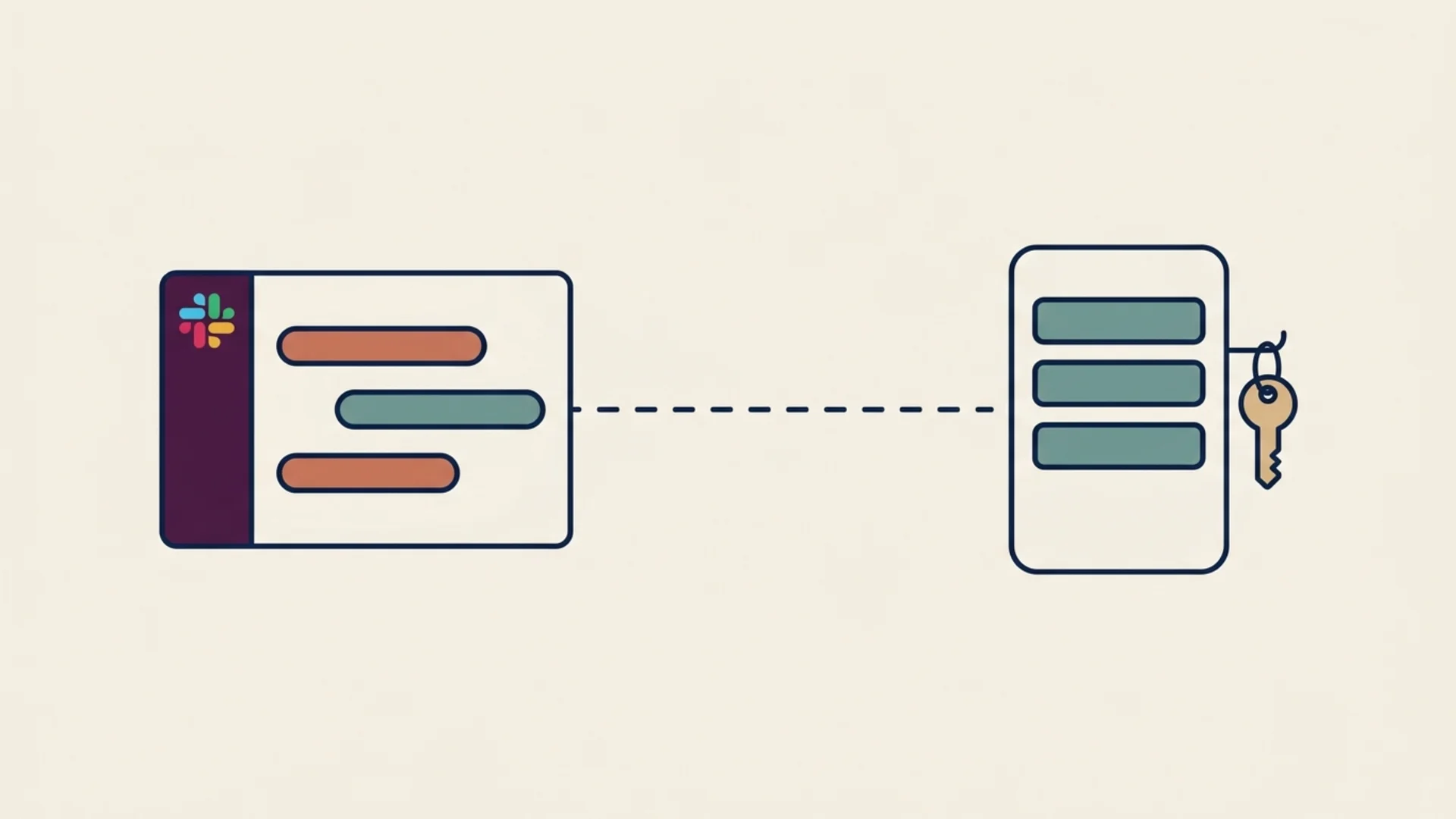
EKM is an add-on for Enterprise Grid. The encryption keys for messages and files live in the customer's AWS Key Management Service, every use of a key is logged in the customer's AWS account, and the customer can revoke access to an organization, workspace, channel, time range or file. This gives a security team visibility and a kill switch.
It does not make Slack end-to-end encrypted. Slack's servers still request the keys and decrypt content to run the service, so while access is allowed, the data is readable on Slack's side. Revoking a key cuts off Slack's access, and yours, until it is restored.
Does It Matter That Slack Isn't End-to-End Encrypted?
For a lot of everyday work chat, standard encryption is acceptable. It starts to matter when:
- You handle client-confidential work, such as legal, accounting or healthcare. See secure client communication for law and CA firms.
- You fall under data protection rules such as India's DPDP Act or GDPR, and chat carries personal data.
- You share credentials, financials or product plans in channels.
- You need former staff and vendors to lose access cleanly; see offboarding without leaking client data.
How to Get End-to-End Encrypted Team Chat
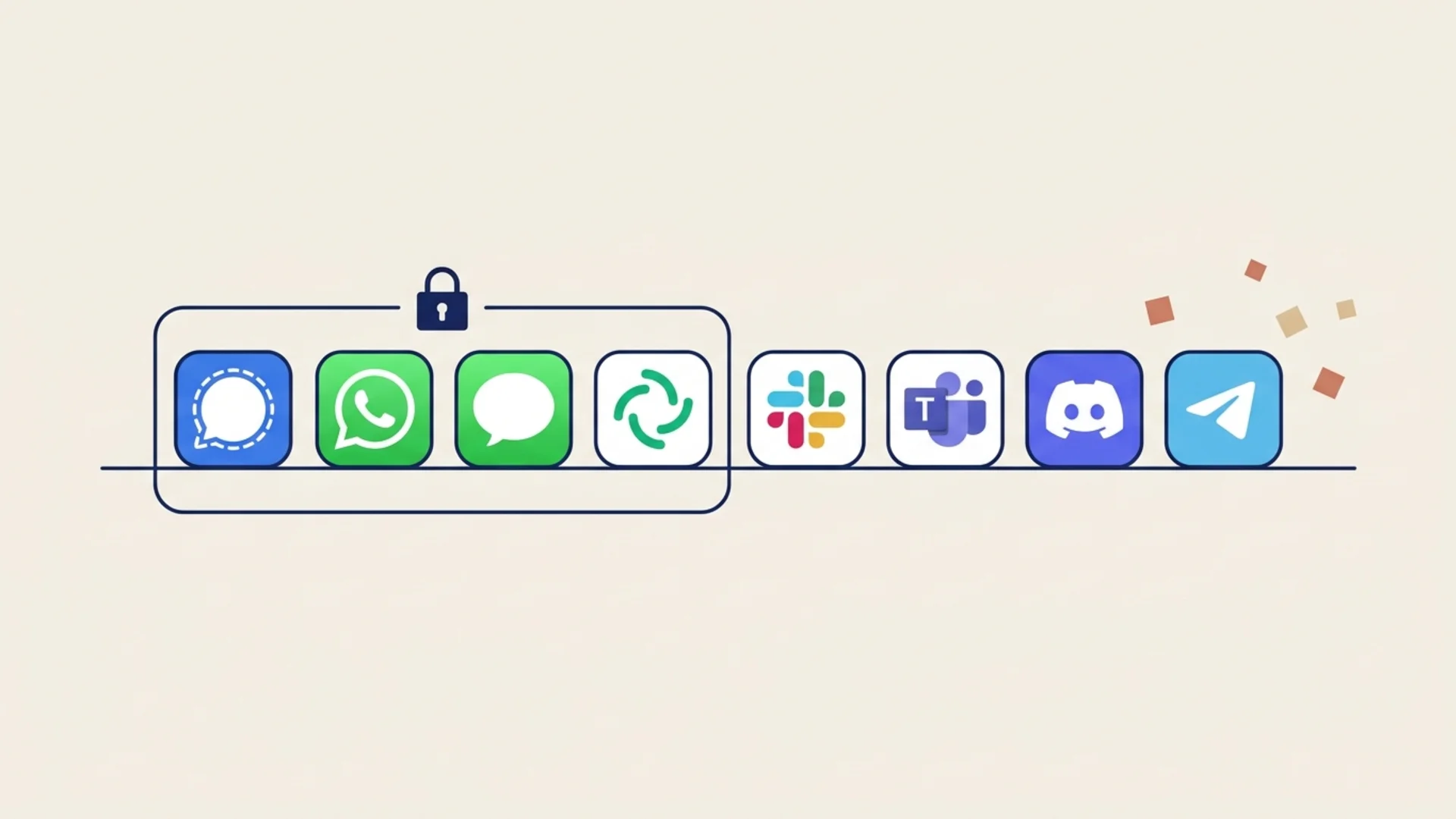
If you need channels, roles and multi-device use with end-to-end encryption by default, look for a workspace built on a modern group protocol. Lupyd uses the Signal Protocol for direct messages and MLS (RFC 9420) for group channels, so Lupyd's servers relay ciphertext they cannot read. Search runs on your device. You can try it alongside your current tools; see our side-by-side comparison and the wider table of which messaging apps are end-to-end encrypted, including Telegram and Google Meet.
Frequently Asked Questions
Is Slack end-to-end encrypted?
No. Slack encrypts data in transit and at rest, but Slack manages the keys and decrypts content on its servers, on every plan.
Are Slack direct messages private?
Slack DMs are not end-to-end encrypted. On Business+ and Enterprise Grid plans, workspace owners can apply to export direct messages, and Slack can produce stored messages in response to valid legal requests.
Can Slack read my messages?
Technically yes. Messages are decrypted on Slack's side to provide search, integrations and other features. Staff access is limited by Slack's policies rather than by encryption.
Does Slack Enterprise Key Management make Slack end-to-end encrypted?
No. EKM lets an Enterprise Grid customer hold the keys in AWS KMS, log their use and revoke them, but Slack still decrypts content on its servers while access is allowed.
Are Slack huddles end-to-end encrypted?
No. Huddles are encrypted in transit, but they are not end-to-end encrypted.
Final Takeaway
Slack is encrypted, but not end-to-end encrypted, and EKM does not change that. If your team's conversations would cause real harm if they leaked, use a tool that encrypts them on your devices by default, and keep Slack for work that doesn't need it.
- ✓ Slack is not end-to-end encrypted on any plan; it encrypts data in transit and at rest with keys Slack manages.
- ✓ Enterprise Key Management (an Enterprise Grid add-on) keeps keys in the customer's AWS KMS with logging and revocation, but Slack still decrypts content to run the service.
- ✓ On Business+ and Enterprise Grid, workspace owners can apply to export private channels and direct messages.
- ✓ Integrations can read the channels they are given access to, and stored content can be produced under valid legal process.
- ✓ Teams handling client-confidential or regulated data should use a workspace that is end-to-end encrypted by default.
The workspace where nothing leaks
End-to-end encrypted channels and chat for your team, built on the Signal Protocol and MLS. Available on macOS, Windows, Linux and Android.