Client Data Boundary: Uncontrolled Consumer Messaging vs Sovereign Encrypted Workspace
Message Payload
Untrusted Relay / ISP
Zero-Knowledge E2EE
How personal chat apps leak privileged advice and KYC files through unmanaged devices and unencrypted backups, contrasted with zero-knowledge E2EE containment.
A partner sends a draft settlement to a client on WhatsApp. An articled assistant receives a client's PAN card and bank statement as phone photos and forwards them to a colleague. A clerk keeps a client group open long after the matter ends.
Nobody did anything unusual. This is how many law firms and chartered accountancy firms work every day. Yet both professions run on one thing: clients trusting you with their most sensitive information.
This guide covers what the law and professional rules expect, where confidentiality actually leaks, and how to run a safer workflow, whether you're handling a high-stakes legal matter or a peak filing season.
What Your Clients Trust You With
Clients share details with their lawyers and accountants that they wouldn't share with their own families. When a firm looks at its daily message traffic, the inventory of confidential assets is staggering:
Law Firms Hold
- Privileged advice, case strategy, and defense theories
- Settlement discussions, commercial concessions, and valuations
- Draft agreements, unfiled pleadings, and witness evidence
- Identity, family, and financial details of high-net-worth clients
- Internal dispute files and corporate governance deliberations
CA & Accounting Firms Hold
- PAN cards and unmasked Aadhaar copies
- Bank statements, credit histories, and account numbers
- Income tax & GST returns, salary slips, and Form 16s
- Business financials, property records, and audit notes
- Portal credentials for Income Tax, MCA, and GST portals
Taken together, these are the exact documents used in identity theft, financial fraud, and extortion. The cost of a leak isn't only a regulatory penalty. It's the client's trust, market reputation, and often the client themselves.
What the Law and Professional Rules Say
For Lawyers: Section 132 of the BSA, 2023
In India, lawyer-client confidentiality is protected by Section 132 of the Bharatiya Sakshya Adhiniyam (BSA), 2023, which replaced Section 126 of the Indian Evidence Act, 1872. In broad terms:
- An advocate generally cannot disclose communications made by a client in the course of professional engagement, without the client's express consent.
- It covers advice given to the client and the contents of documents learned about in the course of the professional work.
- The obligation continues permanently after the engagement ends.
- Crucially, it extends to the advocate's interpreters, clerks, and employees.
- There are statutory exceptions, such as communications made in furtherance of an illegal purpose, or where the advocate observes a crime or fraud committed since the engagement began.
For CAs and Accountants: Professional Ethics and Contracts
Chartered accountants are bound by strict confidentiality duties under their professional codes of ethics (including ICAI guidelines) and express contractual engagement terms.
Unlike advocates, chartered accountants and tax advisers generally do not have the same statutory evidentiary privilege against compelled state disclosure that Section 132 confers. Consequently, an accounting firm's confidentiality perimeter rests directly on professional ethics, airtight contracts, and operational security safeguards.
For Everyone: The DPDP Act
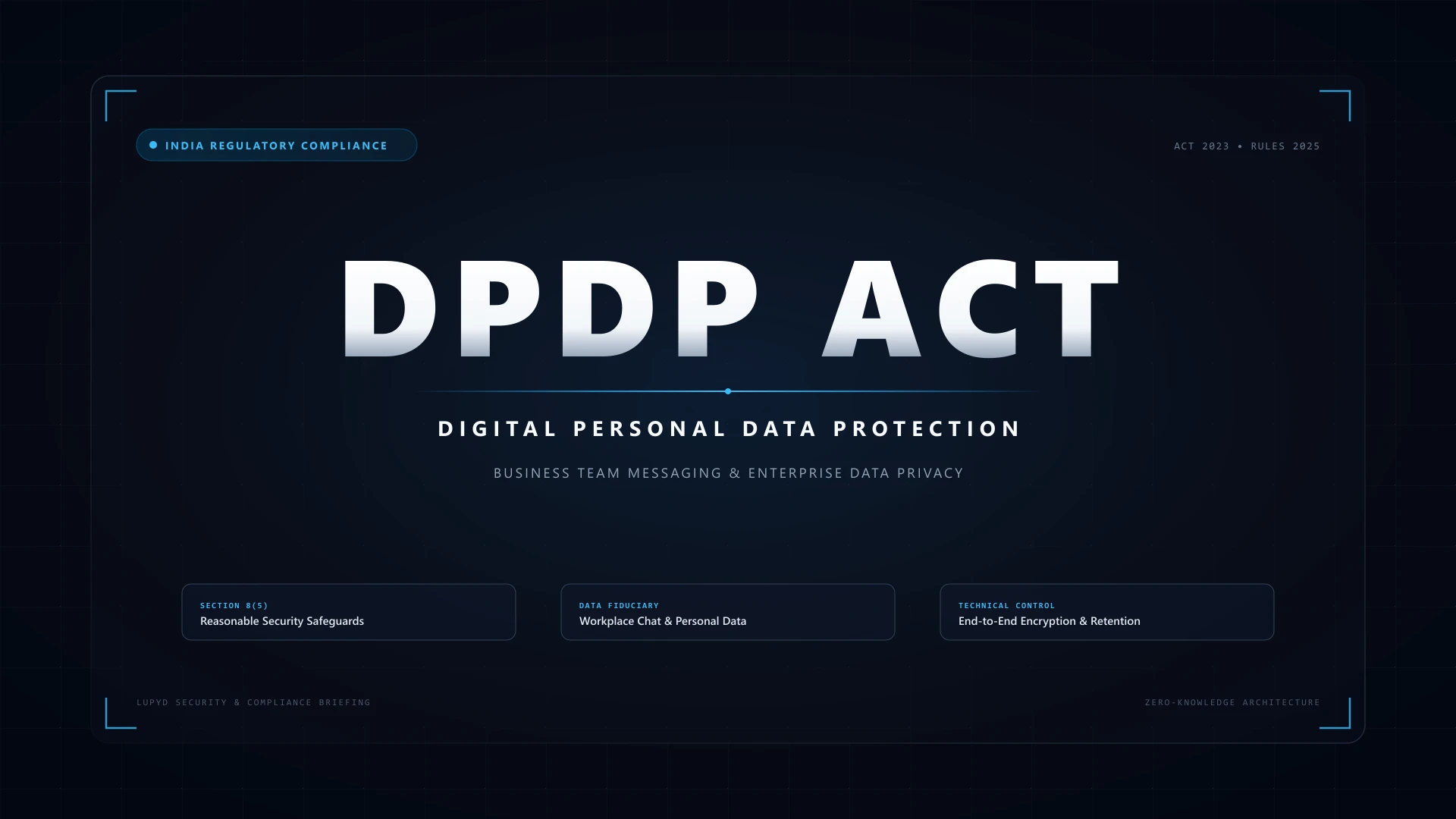
India's Digital Personal Data Protection (DPDP) Act and its accompanying Rules are phasing in, with core compliance enforcement expected around May 2027. Any professional firm that determines how personal data is processed qualifies as a Data Fiduciary.
Under the DPDP framework, law and CA firms are legally obligated to:
Implement reasonable technical security safeguards, such as end-to-end encryption and strict role-based access control.
Maintain comprehensive audit logs and report data breaches to the Data Protection Board (DPB) and affected individuals within strict mandatory timelines.
Hold all third-party processors, including messaging platforms and cloud storage vendors, to matching statutory security standards.
Permanently erase client personal data once the statutory or contractual purpose is served, preventing zombie data retention.
Professional confidentiality and DPDP obligations are separate legal duties—both apply concurrently. For a deeper breakdown, read our DPDP Act guide for team messaging.
The Gap: Privilege Is Not Security
This is the blind spot for many senior partners and firm administrators: Legal privilege and professional codes protect you against compelled testimony in court. They do not stop data packets from leaking.
Privilege does nothing to prevent:
- An associate's smartphone being misplaced in an airport or cab, loaded with five years of unencrypted client PDFs
- A compromised personal Google Drive or iCloud account holding automatic, unencrypted chat backups
- An articled assistant mistakenly forwarding a PAN card image or transaction audit note to an unintended contact
- A client's family member glancing at lock-screen notifications on an iPad or shared household tablet
- A former junior advocate or intern who remains a silent participant in an active client group chat months after resigning
- A sensitive document copied into phone photo galleries, download folders, and desktop sync directories after a single chat forward
If client material leaks on public networks, the damage is permanent. Winning a subsequent legal argument that the document was privileged does not un-leak the data. The only viable standard is stopping the leak at the source.
Where Confidentiality Actually Leaks (9 Critical Risk Points)
Personal Chat Applications
Matters handled across personal WhatsApp accounts live on individual phones outside the firm's administrative control. When an employee or contractor departs, client conversations depart with them. See Is WhatsApp Safe for Business and Client Communication?
Documents Scattered Across Phone Galleries
A client snaps a photo of their PAN card or Aadhaar and sends it over chat. The consumer app automatically downloads it into the camera roll, syncs it to personal cloud storage, and caches it in local storage. One document now exists across four uncontrolled copies.
Unencrypted Cloud Backups
While messages are end-to-end encrypted in transit, consumer messaging backups to Google Drive or iCloud frequently lack end-to-end encryption by default. Readable database backups reside on consumer cloud servers beyond firm governance.
Portal Credentials Shared in Chat
Income tax e-filing passwords, MCA logins, and GST portal OTPs shared in chat threads become permanent, searchable keys to the client's financial universe for anyone holding the phone.
Shared and Unmanaged Family Devices
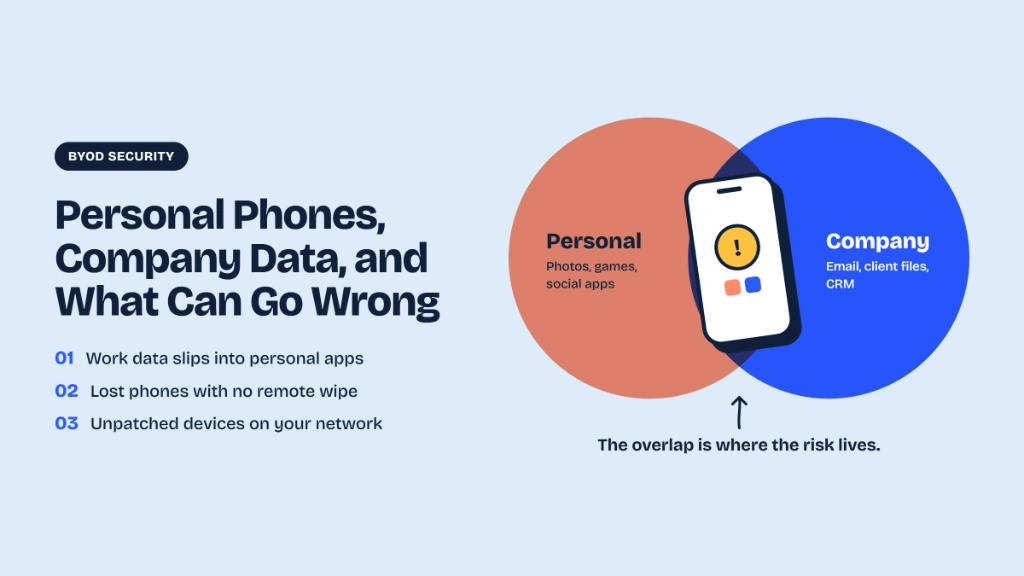
Family tablets, unpatched personal laptops, and shared home desktops frequently expose corporate and legal files. See our in-depth analysis on BYOD Security: Personal Phones, Company Data, and What Can Go Wrong.
Bloated and Uncontrolled Groups
A single group chat combining a client, two partners, three junior associates, a clerk, an intern, and an outside valuation expert is only as secure as its least disciplined member.
Staff Turnover Without Access Revocation
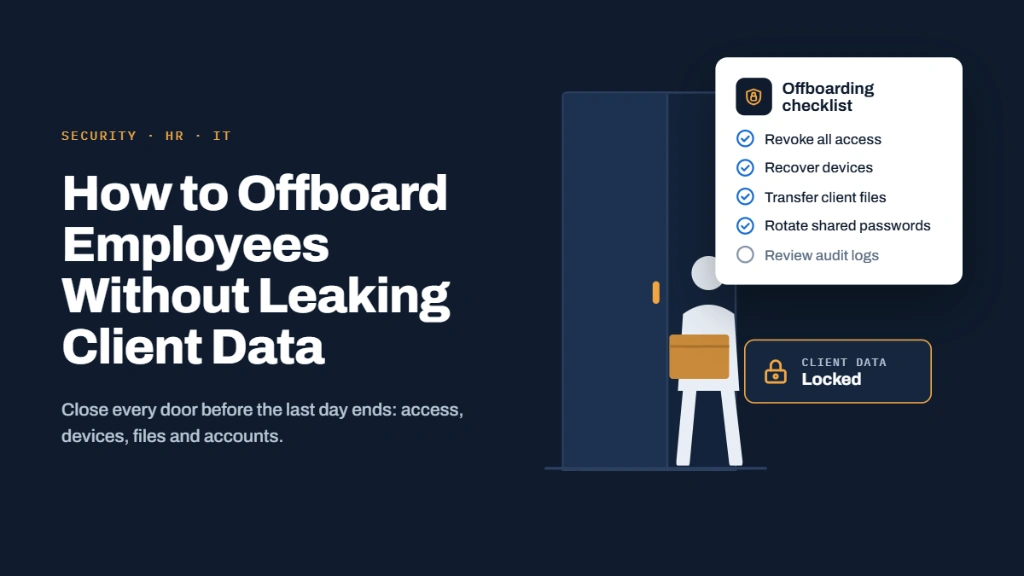
Interns and articled assistants complete their terms and rotate out. Without a rigorous, automated offboarding routine, their message history and saved client files remain active indefinitely. Review How to Offboard Employees Without Leaking Client Data.
Filing-Season Pressure
Deadlines generate shortcuts. Under audit pressure or tax filing deadlines, staff forward spreadsheets into random groups, skip verification, and leave client records in chats for years.
The Client's Own Careless Habits
Clients screenshot legal advice, forward settlement emails to third parties, and access files on insecure public devices. If the firm does not establish channel protocols at onboarding, confidentiality collapses from the client's end.
Workflow 1: Running a Confidential Client Matter (Law Firms)
Law firms should treat every matter as an isolated, sovereign workspace:
1. Open the Matter Properly
Create a dedicated, isolated channel or workspace for each legal matter. Never mix multiple matters or distinct disputes within a single generic client group.
2. Enforce Least-Privilege Membership
Enumerate exactly who requires matter access: lead partner, assigned associates, responsible clerk, and authorized external counsel. While Section 132 covers clerks and employees, every extra participant multiplies your exposure surface.
3. Establish Rules in the Engagement Letter
Specify approved communication channels directly in the onboarding engagement letter. Instruct the client never to forward privileged advice, screenshot discussions, or transmit confidential instructions over unencrypted consumer SMS or consumer chats.
4. Separate Substance From Logistics
Reserve end-to-end encrypted messaging strictly for substantive legal advice, case strategy, settlement numbers, and draft pleadings. Keep routine court scheduling and hearing dates separate.
5. Distribute Documents Deliberately
Use access-controlled, expiring links or zero-knowledge workspace attachments rather than raw email attachments or uncontrolled chat forwards.
6. Maintain the Canonical Matter Record
Promptly extract key communications, settlement instructions, and evidence into the firm's formal document management system. Unstructured chat history dispersed across individual associate phones is not an audit record.
7. Close the Matter Cleanly
Upon case conclusion or settlement execution, archive what statutory retention requires, purge ephemeral drafts, and immediately revoke access for all team members. Section 132 privilege endures indefinitely, and so must your storage discipline.
Workflow 2: Collecting Client Documents Safely (CA & Accounting Firms)
Tax returns, GST reconciliations, and audit reviews involve dense identity and banking data. Implement this disciplined intake process:
1. Mandate the Official Intake Route
State explicitly in client engagement agreements how documents must be uploaded, and prohibit document transmission via personal staff WhatsApp numbers.
2. Collect Minimal Personal Identifiers
The less personal data you hold, the lower your fiduciary liability under the DPDP Act. Where legal requirements allow, request masked copies of Aadhaar (masking the first 8 digits) and redact non-essential personal identifiers.
3. Ban Password Transmission Over Chat
Never ask clients to text passwords for Income Tax, GST, or bank portals over chat. Utilize delegated portal access, client-side authorization, or official secondary authorization workflows.
4. Execute the "File and Delete" Routine
Immediately transfer received financial statements and KYC scans into designated, access-restricted client directories with standardized naming conventions. Promptly delete the files from local downloads, chats, and mobile photo galleries.
5. Segment Access by Client Assignment
Staff and articled assistants should only access records for the specific clients they actively service. Restrict broad firm-wide shared drive permissions.
6. Enforce Purpose-Based Deletion & Offboarding
Align document retention with statutory tax laws (e.g., 6–8 years for specific assessment files), and delete non-mandatory working papers once filing concludes. Whenever an assistant or clerk departs, execute immediate credential revocation.
Which Channel for Which Communication?
Not all communications present equal exposure risk. Match the channel to the sensitivity of the information:
| Type of Communication / Document | Primary Risk | Mandated Approach |
|---|---|---|
| Scheduling & Hearing Logistics | Low | Standard email or verified channels are sufficient |
| Legal Advice & Case Strategy | Privileged material leak | End-to-end encrypted channel with strictly limited members |
| Draft Agreements & Pleadings | Premature leak before filing | Access-controlled workspace or expiring secure links |
| Settlement Discussions | Compromising negotiation position | E2EE channel, restricted forwarding, ephemeral retention |
| PAN & Aadhaar Copies | Identity theft & DPDP violations | Secure upload portal, masked copies, zero gallery caching |
| Bank Statements | Account & liquidity exposure | Encrypted workspace; file into matter directory, purge from chat |
| GST & Income Tax Returns | Commercial business data exposure | Access-controlled folders with least-privilege staff permissions |
| Salary Slips & Form 16 | Employee personal financial exposure | Restrict access to assigned team; purge after filing purpose is served |
| Portal Passwords & Credentials | Full account takeover & fraud | Never transmit over chat; utilize delegated portal access mechanisms |
A 12-Point Checklist for Law and CA Firms
Use this operational checklist to audit your firm's current client communications:
Written Channel Guidelines: Notify clients in engagement letters exactly which channels are authorized for communications.
Halt Personal WhatsApp Matters: Transition substantive legal and tax deliberations entirely off personal messaging accounts.
Matter-Specific Channels: Provision an isolated, access-controlled channel for each distinct client matter or filing team.
Mandatory E2EE Messaging: Enforce verifiable end-to-end encryption for all privileged strategy notes, draft filings, and advice.
Zero Chat Password Collection: Strictly ban staff from requesting or receiving portal credentials over chat threads.
Data Minimization & Masking: Collect only mandatory documents, requesting masked Aadhaar copies wherever legally acceptable.
File & Purge Routine: Save documents immediately into client directories, purging files from message threads and device galleries.
Encrypted or Disabled Cloud Backups: Enable end-to-end encrypted chat backups or disable third-party cloud sync on work devices.
Endpoint Hardware Hygiene: Require biometric or PIN screen locks and prompt OS updates on all phones touching client data. Review our BYOD security guide.
Role-Based Access Boundaries: Grant team members access strictly to their assigned client matters and case folders.
Retention & Matter Closure: Formulate explicit retention windows, archiving required case records and closing matters cleanly.
Rigorous Staff Exit Protocol: Execute a binding offboarding checklist whenever an associate, clerk, or intern departs. Follow our employee offboarding guide.
Lupyd: Encrypted Team Messaging for Law and CA Firms
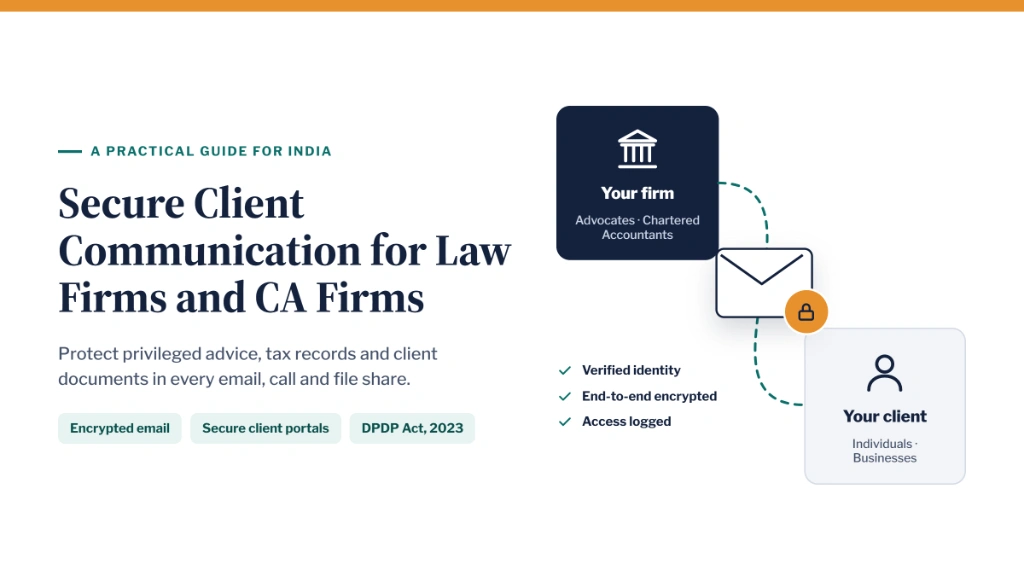
Lupyd is an open-source, end-to-end encrypted team messenger built for organizations handling sensitive, confidential communications. It provides your firm with a single, private workspace where client conversations, voice and video calls, and matter workflows operate together—preventing work from drifting onto consumer messaging apps.
Group conversations in Lupyd utilize the IETF Messaging Layer Security (MLS) standard. The underlying architecture ensures that servers never have custody of message plaintext or decryption keys.
When an associate, clerk, or intern is removed from a matter group, Lupyd's MLS implementation ratchets the group epoch, generating fresh encryption keys. The removed participant cannot decrypt any future messages sent to the channel. Combined with device hygiene and clean exit protocols, MLS provides mathematical boundaries around matter confidentiality.
⚖️ How Law Firms Deploy Lupyd
- One private channel per matter: Strict membership limited exclusively to assigned partners, associates, and clerks.
- Zero-knowledge discussion: Deliberate case strategy, settlement figures, and draft pleadings remain cryptographically private.
- Unified encrypted calling: Host confidential client consultations and internal case briefings inside the same encrypted container.
- Private case deadline tracking: Organize case milestones and court dates without leaking matter timelines to commercial cloud trackers.
📊 How CA & Accounting Firms Deploy Lupyd
- One channel per client or filing team: Dedicated spaces for client query resolution and intake coordination.
- Secure document intake: Exchange sensitive financial reports and audit inquiries without gallery caching on personal phones.
- Audit deadline management: Track GST and tax filing deadlines with role-assigned tasks protected inside the firm workspace.
- Anonymous internal feedback: Collect honest process feedback from articled assistants and staff via zero-knowledge survey tools.
What You Get with Lupyd
| Lupyd Feature | Technical Architecture | Why It Matters for Your Firm |
|---|---|---|
| End-to-End Encrypted Group Chat (MLS) | IETF MLS tree ratchets; servers cannot access message plaintext or cryptographic keys | Legal advice, strategy, and client financial records remain completely private from service providers and network intermediaries. |
| Firefly Chat Suite | Open-source client and relay suite with zero cloud lock-in | Deploy one dedicated channel per matter or client with granular, verifiable membership control. |
| Encrypted Audio & Video Calling | 1-on-1 and group calling with secure WebRTC media flows | Hold sensitive client consultations and partner conferences without switching between external commercial apps. |
| Project & Task Organization | Self-contained matter management integrated into channels | Track hearing dates, tax deadlines, and document tasks without exposing case context to third-party SaaS vendors. |
| Noon Anonymous Surveys | Cryptographic blind signatures ensuring unlinkable submissions | Gather honest feedback and compliance reporting from articled assistants and staff with mathematical anonymity. |
| Cryptographic Message Verification | Local hash chains and digital signatures verifying integrity | Guarantees that settlement offers, client instructions, and audit numbers arrived exactly as dispatched without tampering. |
| 100% Open Source | Public repositories on GitHub and detailed documentation | Your firm's IT auditor or independent cybersecurity counsel can inspect and verify all security assertions directly. |
Explore the full platform specifications on the Lupyd features page, consult our FAQ, or review enterprise deployment tiers on our pricing portal.
How Firefly keeps team group chats private • Why securing group chats takes more than DM encryption • How real-time calling works in Lupyd • Keep team projects organized without exposing sensitive work • Signal Protocol vs MLS: Modern Group Security Explained
No messenger replaces professional legal acumen or ethical judgment, and Lupyd does not alter your statutory obligations. It simply provides the cryptographic foundation that makes confidential workflows practical and enforceable.
Try It with Your Firm
We're offering free pilot programs to a select number of law firms, CA firms, and professional consultancies who want to transition sensitive client workflows out of consumer chat apps. We'll assist with your setup, and in return we ask for your candid feedback.
Request a pilot →Frequently Asked Questions
Is WhatsApp safe for client communication in a law or CA firm?
While WhatsApp encrypts messages in transit, its consumer profile introduces severe operational liabilities: personal account ownership, unencrypted third-party cloud backups, automated gallery downloads, lack of organizational retention control, and inability to revoke departed staff access. For professional compliance, dedicated sovereign workspaces are essential.
Does attorney-client privilege protect my chats if they leak?
No. Legal privilege restricts compelled testimonial disclosure in judicial proceedings. It does not prevent external data theft, cloud sync exposure, or accidental forwards, nor does it undo reputational and commercial fallout once information enters the public domain.
Does the privilege cover clerks and employees?
Yes. Section 132 of the Bharatiya Sakshya Adhiniyam, 2023 expressly states that its confidentiality protections extend to the clerks, interpreters, and employees of advocates. However, having more individuals in a conversation increases your operational risk surface.
What about in-house counsel?
Reporting on the Supreme Court's late-2025 judgment indicates that in-house counsel do not enjoy the same expansive Section 132 statutory privilege that external enrolled advocates receive, retaining only limited protection under Section 134. In-house legal departments require specific counsel regarding their communications architecture.
Do CAs have the same privilege as lawyers?
Chartered accountants do not have the same statutory evidentiary privilege against state disclosure that advocates possess under Section 132 of the BSA. CA confidentiality relies strictly on professional codes of ethics, client contracts, and technical data safeguards.
Is it safe to collect PAN and Aadhaar copies on WhatsApp?
No. While transmission is encrypted, media files are automatically stored in device photo galleries and mirrored into unencrypted consumer cloud backups. Always utilize dedicated upload portals, request masked Aadhaar copies, and delete files from staging environments immediately after filing.
Should clients send portal passwords over chat?
Never. Passwords stored in chat threads represent high-risk attack vectors. Utilize official delegated access routes offered by government portals (such as CA authorization on the Income Tax and GST portals) to avoid holding master credentials.
How long should we keep client documents?
Retain what statutory legislation (such as the Income Tax Act or Companies Act) and professional guidelines mandate, and securely erase non-essential files once the engagement completes. Document retention schedules should be formalized in client engagement letters.
Does the DPDP Act apply to a small firm?
Yes. The Digital Personal Data Protection Act applies across Indian territory to all Data Fiduciaries processing digital personal data, irrespective of head count, with only narrow government exemptions. Small firms remain liable for maintaining reasonable safeguards and reporting data breaches.
What should we do if a staff phone with client data is lost?
Initiate your emergency incident protocol within hours: remotely wipe work containers if enrolled in MDM/Work Profile, immediately revoke account sessions and change shared credentials, assess what client records were exposed, and evaluate statutory breach reporting obligations under DPDP rules.
Last updated: 11 October 2026. This article is general information and not legal or professional advice. Statutes, rules, professional codes, and court judgments change, so verify details with primary sources.
- ✓ Indian law and CA firms routinely exchange privileged advice, PAN cards, bank statements, and GST records over personal WhatsApp chats without firm oversight.
- ✓ Section 132 of the Bharatiya Sakshya Adhiniyam (BSA), 2023 protects advocate-client privilege, but legal privilege is not an operational security safeguard.
- ✓ Chartered accountants and accounting firms are bound by professional ethics, contracts, and India's DPDP Act, requiring reasonable security safeguards and strict breach reporting.
- ✓ Confidentiality leaks primarily through personal chat apps, unencrypted cloud backups, rogue photos in phone galleries, shared family devices, and unrevoked staff access.
- ✓ A safe workflow separates client matters into dedicated, access-controlled end-to-end encrypted workspaces, enforces masked ID intake, and applies strict exit routines.
- ✓ Lupyd provides law and CA firms with sovereign, end-to-end encrypted MLS group channels, private calling, and zero-knowledge workspaces that keep client records strictly protected.