Vendor Risk Boundary: In-Transit / At-Rest Encryption vs Zero-Knowledge Local Key Custody
Message Payload
Untrusted Relay / ISP
Zero-Knowledge E2EE
How traditional SaaS vendors and hosted server providers retain decryption keys to client accounting and CRM records, contrasted with sovereign end-to-end encryption.
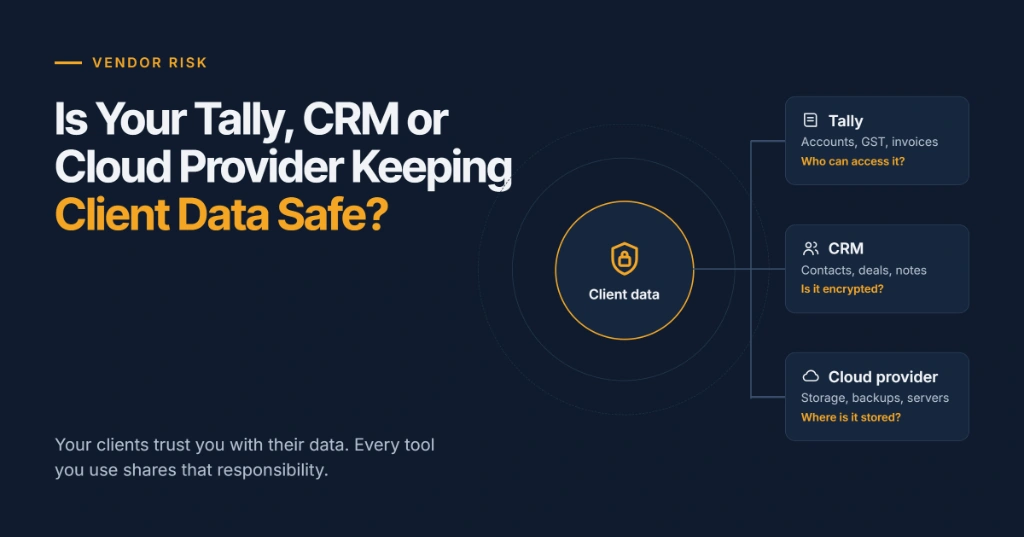
Your firm may lock its office, password-protect its laptops, and train staff on phishing. But most of your client data no longer sits on your own machines. It lives inside the tools you pay for: accounting software, a CRM, a cloud drive, an email provider, and a team chat app.
Each of those vendors is now part of your security perimeter. If one of them is breached, misconfigured, or can read your data, your clients are exposed. Under India's Digital Personal Data Protection (DPDP) Act, the legal responsibility still sits squarely with you.
This guide explains vendor risk in plain language, shows where client data actually travels in a typical firm, and provides an actionable checklist to evaluate every software provider you use.
What Vendor Risk Means
Vendor risk is the probability that an external company you rely on exposes, loses, leaks, or misuses your data. You did not make the technical mistake, but your firm and your clients still pay the full price for it.
In professional practices (such as CA firms, legal practices, and agencies), vendor risk typically surfaces across four critical vulnerability vectors:
Breach at the Vendor
Adversaries penetrate the software provider's cloud infrastructure, application code, or database clusters, exfiltrating customer databases that include your firm's confidential client records.
Provider Staff & Insider Access
The vendor's support engineers, sub-contractors, or automated indexing algorithms can read your raw data because the vendor holds the encryption keys on its own servers.
Misconfiguration & Access Drift
A cloud folder accidentally configured with public "anyone with the link" permissions, an orphaned third-party OAuth integration granting blanket read rights, or a departed employee's account that was never de-provisioned.
Opaque Data Handling & Shadow Sub-Processors
You do not know which jurisdiction stores your backups, how long deleted records linger in unencrypted logs, or which downstream AI analytics vendors receive your data streams.
Where Client Data Actually Sits
In a typical Indian chartered accountancy firm, law firm, or corporate consultancy, client data passes through five to ten distinct third-party vendors every single working day. Before auditing your vendors, map where your files and records actually flow:
| Tool Category | Common Examples | Client Data It Holds | Main Risk to Check |
|---|---|---|---|
| Accounting & ERP | Tally Prime, Zoho Books, hosted Tally on private cloud VPS | General ledgers, GST returns, bank statements, client invoices | Who manages the hosting provider, and who holds root server logins |
| CRM & Sales | Zoho CRM, HubSpot, Salesforce | Client contacts, commercial deal notes, billing history, call logs | Over-broad user permissions, bulk CSV export controls |
| Cloud Storage | Google Drive, Microsoft OneDrive, Dropbox | PAN cards, Aadhaar scans, executed contracts, financial audits | Public link sharing, unrevoked access for departed staff |
| Email Services | Google Workspace (Gmail), Microsoft 365 (Outlook) | Legal advice, confidential attachments, tax notices, billing receipts | Hidden auto-forwarding rules, credential phishing, provider-side indexing |
| Team Messaging | WhatsApp Business, Slack, Microsoft Teams | Substantive matter chats, payment slips, draft filings, photos | Personal phone galleries, unencrypted cloud backups, provider-readable databases |
| Integrations & Automation | Zapier, Make, e-sign tools, third-party AI transcription plugins | Mirrored copies of client data drawn from all tools above | Unmonitored third-party data copies retained by forgotten vendors |
The Key Question: Who Holds the Keys?
Almost every software vendor claims in their marketing that "your data is encrypted with military-grade 256-bit AES." While true, that claim is often misleading. The only architectural question that truly matters for security and compliance is: who holds the encryption keys that unlock it?
Encryption in Transit & At Rest
Data is encrypted while traveling across the internet (TLS/HTTPS) and while stored on disk partitions in the data center.
True End-to-End Encryption (E2EE)
Data is encrypted locally on the sender's device and can only be decrypted on the recipient's authorized hardware.
Here is how leading workplace collaboration platforms handle cryptographic key custody by default:
| Collaboration Tool | Default Encryption Architecture | Who Can Read Content? |
|---|---|---|
| Slack | Encrypted in transit and at rest; customer-managed keys (EKM) available only as an expensive add-on for Enterprise Grid plans. | Slack's backend systems, plus organization admins through compliance exports on select plans. |
| Microsoft Teams | Chat messages use standard Microsoft 365 server-side encryption; opt-in E2EE is available for 1-on-1 calls and meetings with Teams Premium add-ons. | Microsoft backend systems can read chats; E2EE calls are restricted to participating endpoints. |
| Lupyd | End-to-end encrypted by default: Signal Protocol for direct chats, IETF Messaging Layer Security (MLS) for groups, and client-side AES for files. | Strictly and exclusively the verified devices belonging to conversation participants. |
Standard server-side encryption at rest is a reasonable baseline for general commodity SaaS. But for privileged legal consultations, statutory audit notes, tax returns, and client KYC records, the safest data is data that your software vendor cannot read even if ordered to do so.
What the DPDP Act Means for You and Your Vendors
Under India's Digital Personal Data Protection (DPDP) Act, 2023, your firm acts as the Data Fiduciary for client personal data. The cloud apps, hosting providers, and software tools you engage are legally classified as Data Processors.
The critical legal reality under Section 8 of the Act is that a Data Fiduciary cannot delegate or outsource statutory liability. If your accounting cloud or CRM vendor suffers a catastrophic breach, the enforcement action, client notices, and financial penalties fall on your firm.
The DPDP Rules, 2025 establish concrete regulatory mandates that apply directly to your vendor ecosystem:
Your legal duty to maintain reasonable technical security safeguards extends to all processing conducted on your behalf. Your vendor contracts must formally mandate robust encryption, logging, and access control.
Upon becoming aware of a personal data breach, your firm must notify the Data Protection Board of India (DPB) and affected individuals without delay, submitting a comprehensive report within 72 hours.
Failure to take reasonable security safeguards to prevent a personal data breach carries administrative penalties of up to Rs 250 crore under Schedule 1 of the DPDP Act.
The practical takeaway: if a vendor delays notifying you of a breach by four days, your firm will automatically violate its mandatory 72-hour statutory reporting timeline. For detailed compliance mechanics, read our comprehensive guide on the DPDP Act for business messaging.
Vendor Risk Checklist: 10 Questions to Ask Every Provider
Run this 10-point due-diligence audit on every software platform, cloud host, and integration that touches client information. If a vendor cannot provide precise, written answers, treat that service as an active risk:
Key Custody: Who holds the encryption keys? The customer, the vendor on its servers, or exclusively the local user endpoints?
Provider-Side Access: Can vendor employees or contractors read raw customer content? Under what technical controls, and is internal access strictly audited?
Data Residency & Storage: In which physical country and on whose cloud infrastructure (AWS, Azure, GCP, or private co-location) does client data reside?
Sub-Processor Disclosure: Who are the vendor's downstream sub-processors? Does the provider notify customers prior to onboarding new processing vendors?
Breach SLA: What is the vendor's contractual deadline to notify you of an incident? It must be well under 24–48 hours to meet your DPDP 72-hour filing window.
Granular Role-Based Access: Can administrative owners restrict staff access strictly to the clients and channels they service, preventing lateral snooping?
Instant Deprovisioning: Can you immediately revoke a departed staff member's credentials, active sessions, and file access tokens across all devices? Review our employee offboarding guide.
Comprehensive Audit Trails: Does the platform log file downloads, client profile views, permission changes, and bulk data exports?
Export & Definitive Deletion: Can your firm export all stored records in open standard formats, and does the vendor permanently scrub backups upon subscription termination?
Telemetry & AI Training Policies: Does the vendor collect behavioral tracking telemetry or utilize your client data and conversations to train proprietary AI models?
How Teams Use Lupyd to Cut Vendor Risk
The most dependable method to minimize vendor risk is architectural: use systems where the vendor cannot read your data in the first place.
Lupyd is a sovereign, end-to-end encrypted team collaboration workspace engineered specifically to solve vendor exposure. Because conversations and shared files are encrypted using the Signal Protocol and IETF MLS directly on user endpoints, Lupyd's intermediate servers operate strictly as zero-knowledge relays.
| User Role / Team | Operational Use Case | How Lupyd Eliminates Vendor Risk |
|---|---|---|
| Chartered Accountancy Firms | Collecting PAN, Aadhaar copies, bank statements, and GST ledgers during filing peaks | Files are encrypted on-device with AES before upload; documents never sit as cleartext files on cloud servers. |
| Law Firms & Advocates | Deliberating privileged case strategies, draft filings, and confidential settlements | One private matter channel per case, encrypted with MLS; membership is strictly ring-fenced to assigned counsel. |
| Agencies & Consultancies | Managing concurrent client engagements across distributed staff | Granular role-based permissions ensure client workspaces and files remain strictly segmented. |
| HR & System Administrators | Managing employee departures and contractor rotations | Revoke account credentials and roles instantly from a centralized dashboard, ratcheting cryptographic group keys. |
| Partners & Leadership | Conducting highly sensitive partner-level consultations | Direct messages utilize pairwise Double Ratchet encryption; private keys stay locked in secure hardware enclaves. |
| Remote & Hybrid Staff | Conducting client consultations and confidential reviews | Encrypted audio and video calling with screen sharing directly inside the secure workspace, eliminating external bridge tools. |
| All Team Members | Searching past matter histories, filings, and case documents | Full-text search executes locally on the user's device, ensuring search terms and indexing data never transmit to a server. |
Lupyd runs zero advertising and zero behavioral telemetry, with cross-platform native clients available for macOS, Windows, Linux, Android, and iOS on the public roadmap. Consolidating fragmented consumer messaging into one zero-knowledge container permanently removes external SaaS vendors from holding readable copies of your client data.
Your Action Plan for This Week
Take these concrete operational steps to identify and mitigate third-party exposure across your firm:
Inventory Every Active Tool: Map all accounting apps, CRMs, cloud drives, webhooks, and informal chat channels (including personal WhatsApp groups) touching client records.
Audit Key Ownership: Classify each tool by who controls encryption keys: your firm, the SaaS provider, or local endpoint devices.
Issue Vendor Questionnaires: Send the 10-point checklist above to your top three high-risk providers (accounting hosting, primary cloud drive, CRM).
Purge Stale Access: Immediately disable ex-employee accounts, sever unused API integrations, and terminate public "anyone with link" file permissions.
Transition Sensitive Matters First: Migrate privileged legal counsel, financial statements, and identity documents onto zero-knowledge encrypted channels like Lupyd.
Update Data Processing Agreements: Revise vendor contracts to require mandatory security safeguards and explicit breach notification SLAs within 24 hours.
Frequently Asked Questions
What is vendor risk management?
Vendor risk management is the systematic practice of identifying, auditing, assessing, and mitigating vulnerabilities that originate from third-party software, cloud service providers, and outsourced processors handling organizational data.
Is my firm legally responsible if a software vendor leaks client data?
Yes. Under India's Digital Personal Data Protection (DPDP) Act, your firm is designated as the Data Fiduciary and retains primary statutory liability. You cannot contractually assign or outsource your responsibility to implement reasonable security safeguards.
Are Slack and Microsoft Teams end-to-end encrypted?
Not by default for team chat. Both platforms utilize server-side encryption in transit and at rest, meaning provider servers hold decryption keys. Microsoft Teams offers opt-in E2EE for 1-on-1 calls and meetings with Teams Premium add-ons, but standard chat messages remain readable by provider systems.
Is "encryption at rest" sufficient for client data?
Encryption at rest safeguards data against physical disk theft at a data center, but because the vendor controls decryption keys, its application stack, engineers, and sub-processors can still access plaintext content. For statutory audits, tax records, and privileged legal advice, end-to-end encryption is the necessary standard.
How often should a professional firm review its vendor stack?
Conduct a formal vendor risk audit at least annually, and re-evaluate third-party security whenever you introduce a new cloud application, connect a SaaS integration (such as Zapier), or deploy an AI assistant with access to firm workspaces.
Is Lupyd suitable for CA and law firms in India?
Yes. Built in India for privacy-first professional teams, Lupyd end-to-end encrypts direct messages, group channels and attachments, and one-on-one calls are encrypted between devices. Client conversations and sensitive documents remain accessible exclusively to authorized firm members.
The Bottom Line
Every software vendor you introduce is an additional attack surface where client data can leak. You cannot eliminate third-party software entirely, but you can ask rigorous questions, strictly enforce least-privilege access, and choose tools engineered with zero-knowledge cryptography where the vendor cannot read your data even if compromised.
Start with the conversations and records that matter most. Try Lupyd and transition your sensitive client workflows into a sovereign workspace where your firm retains absolute cryptographic custody.
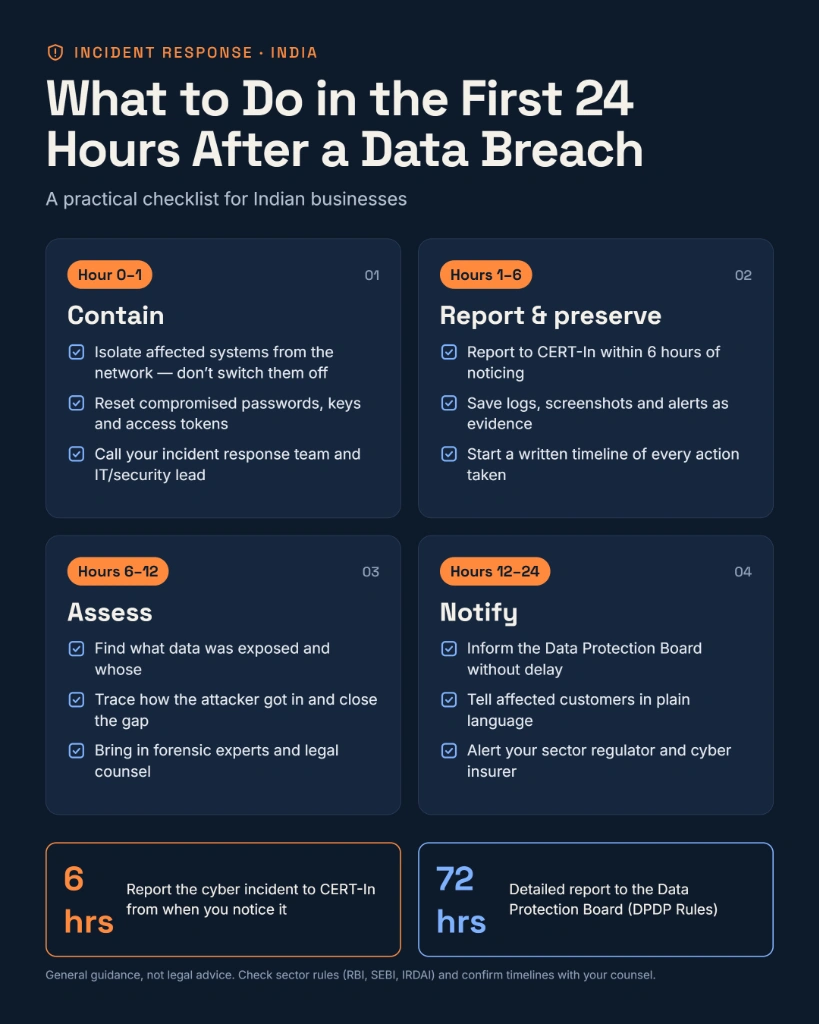
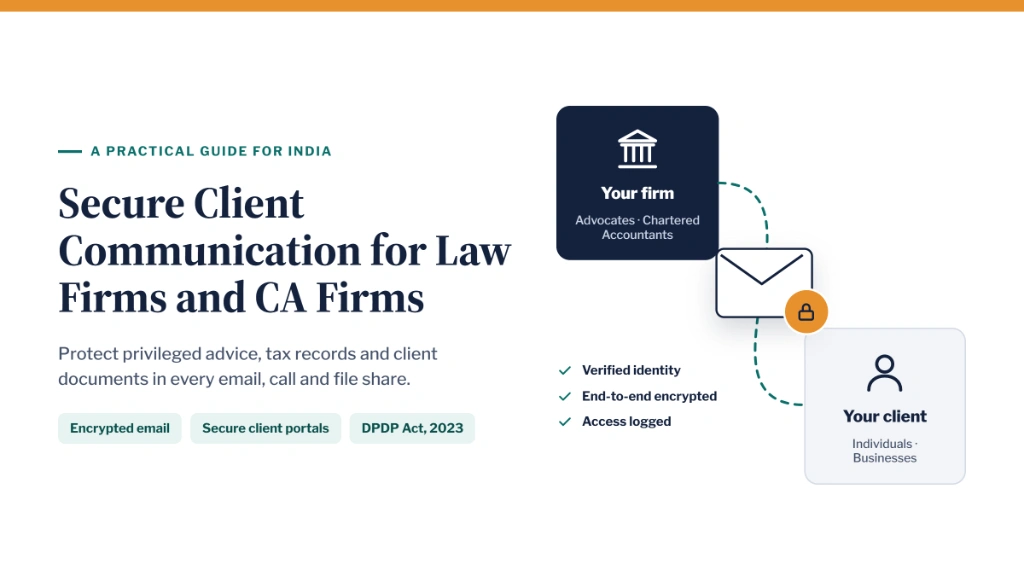
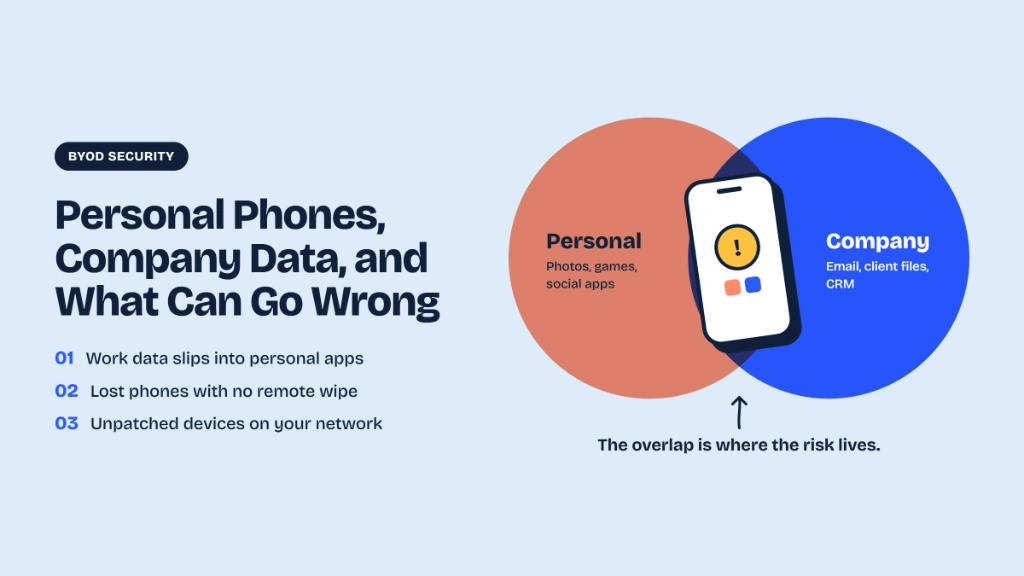
What to Do in the First 24 Hours After a Data Breach • Secure Client Communication for Law Firms and CA Firms • How to Offboard Employees Without Leaking Client Data • BYOD Security: Personal Phones, Company Data, and What Can Go Wrong • Lupyd vs Slack: Key Custody & E2EE Comparison
Sources & References:
Last updated: 23 October 2026. This article is general information and not legal advice. Statutes, rules, professional codes, and cloud terms of service change, so verify details with primary sources.
- ✓ Most client data in Indian professional firms no longer resides on local machines; it is distributed across accounting tools (Tally), CRMs, cloud drives, and messaging platforms.
- ✓ Under India's DPDP Act, 2023, your firm remains the Data Fiduciary legally responsible for client personal data even when processed by third-party software vendors.
- ✓ Vendor risk manifests in 4 primary failure modes: direct vendor breaches, provider staff access, system misconfigurations, and opaque sub-processor chains.
- ✓ Encryption in transit and at rest leaves decryption keys in the provider's hands, meaning vendor breaches, rogue insiders, or legal subpoenas can expose plaintext records.
- ✓ Zero-knowledge end-to-end encryption (E2EE) ensures cryptographic keys never leave client devices, preventing vendors, relays, and cloud hosts from decrypting content.
- ✓ A practical vendor risk audit requires evaluating key custody, sub-processor governance, 72-hour breach reporting readiness, role-based access controls, and data erasure terms.
The workspace where nothing leaks
End-to-end encrypted channels and chat for your team, built on the Signal Protocol and MLS. Available on macOS, Windows, Linux and Android.