Threat Vector & Zero-Knowledge Mitigation Model
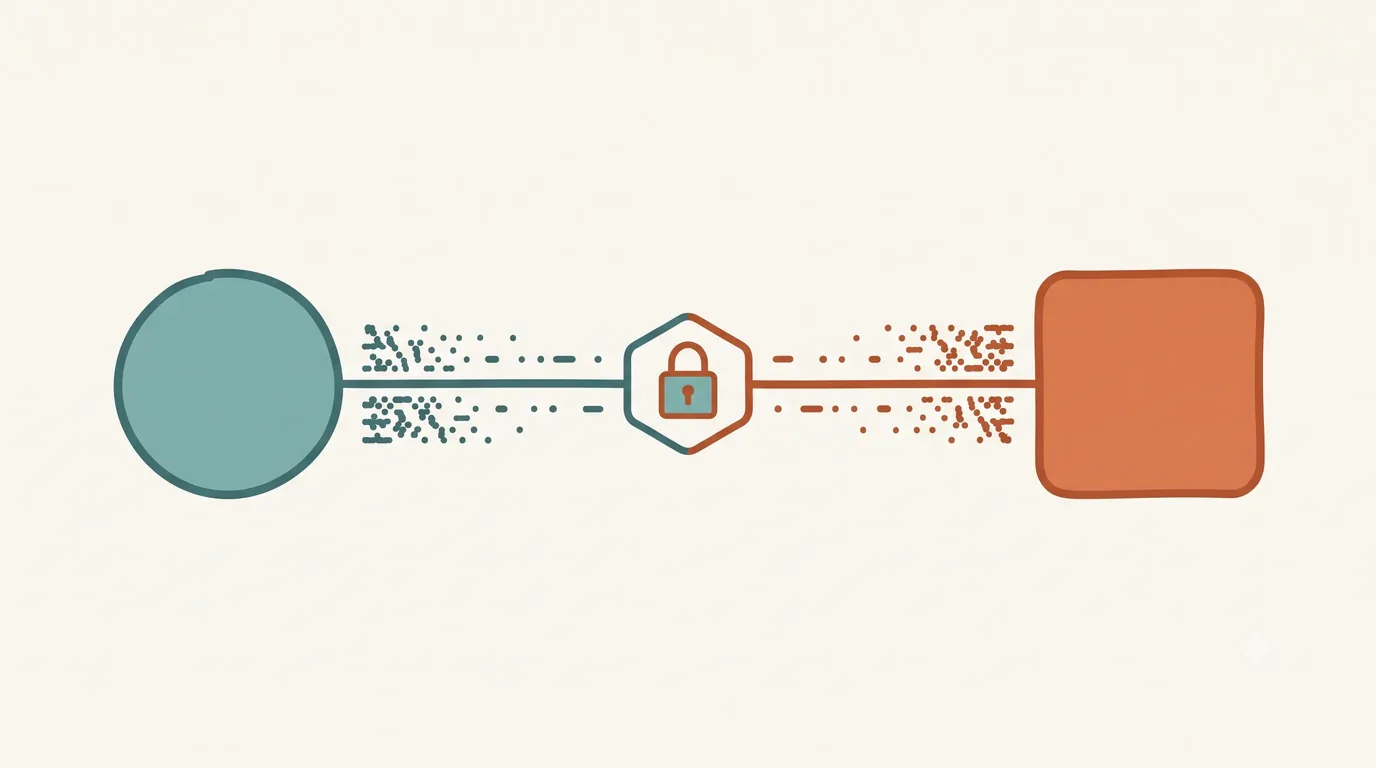
Message Payload
Untrusted Relay / ISP
Zero-Knowledge E2EE
Evaluating threats across hostile network relays and defining endpoint cryptographic mitigations.
Zero-Knowledge Relay & SHA-256 Digest Verification
Message Body
No Plaintext Access
Checks epoch monotonic counter and forwards packet.
Decryption & Check
Endpoint hashing guarantees message integrity and tamper detection, while servers route packets blindly without access to decryption keys.
Virtually every modern website and messaging application advertises that it is "encrypted." Yet massive data leaks, executive subpoena compliance, and automated ad targeting continue to expose sensitive user data every day. The discrepancy lies in what is actually being secured, and where the encryption stops.
The 'Encrypted in Transit' Illusion
When an enterprise messaging platform advertises "bank-level 256-bit encryption in transit," they are typically referring to standard Transport Layer Security (TLS/HTTPS). TLS is essential, but it only encrypts the connection between your device and their server.
Once your packet arrives at the company's datacenter, the TLS envelope is opened. The server inspects the plaintext to route it, search it, and index it into a database. In this model, the cloud provider has complete visibility into everything you write. If the company is compromised, rogue employees abuse internal tools, or law enforcement serves a secret warrant, your conversations are accessible in plain text.
The Three Core Pillars of Secure Messaging
True communication protection requires three distinct guarantees operating simultaneously:
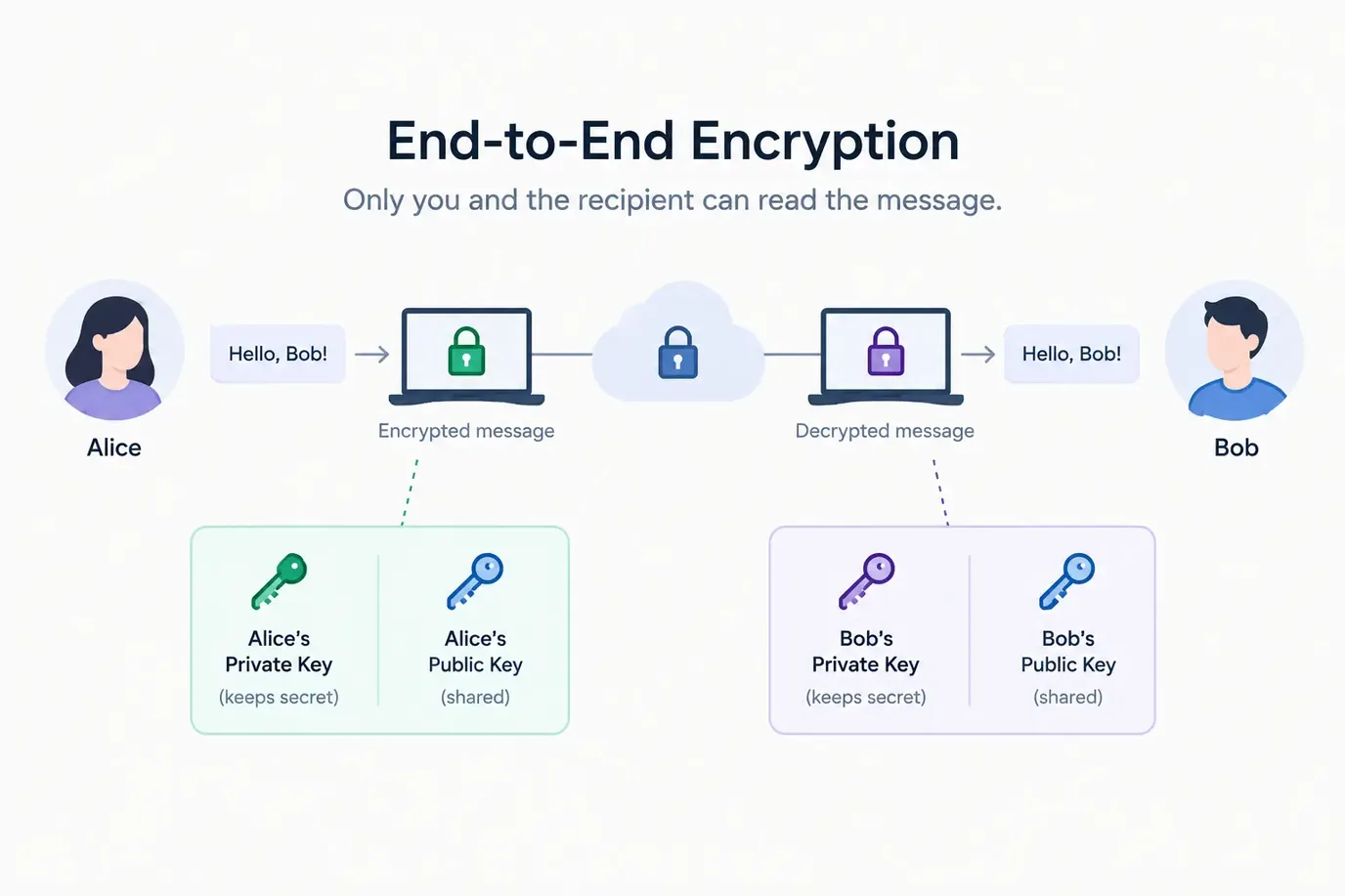
- Confidentiality (Zero-Knowledge E2EE): The plaintext message is encrypted on the sender's device and can only be decrypted by the recipient's private key. The intermediate relay receives only an opaque binary payload.
- Authenticity and Integrity: The recipient must be mathematically certain that the message came from the claimed sender and was not altered by even a single bit during relay.
- Forward Secrecy and Post-Compromise Security: Session keys are ephemeral. If an adversary steals an active device key today, they cannot use it to retrospectively decrypt conversations recorded in the past.
How Blind Couriers Protect Conversational Privacy
In Lupyd's security model, intermediate servers operate strictly as blind couriers. Think of a blind courier like an armored truck service delivering a steel lockbox: the driver knows which street address to drop the box at, but has neither the key nor the ability to inspect the contents inside.
- ✓ Transport encryption (HTTPS/TLS) only protects packets between your device and the cloud provider's server.
- ✓ True end-to-end security ensures that data remains encrypted while traversing through the relay and resting on database servers.
- ✓ Message integrity checks (SHA-256) protect against undetected payload modification or tampering in transit.
- ✓ Decentralized nonces protect against packet replay attacks, ensuring each ciphertext envelope is unique.
- ✓ Authentication must be verified cryptographically through public key fingerprints rather than trusted server assertions.