Cryptographic Message Transformation Flow
Local Key Derivation
Unreadable to Couriers
✓ Authenticated
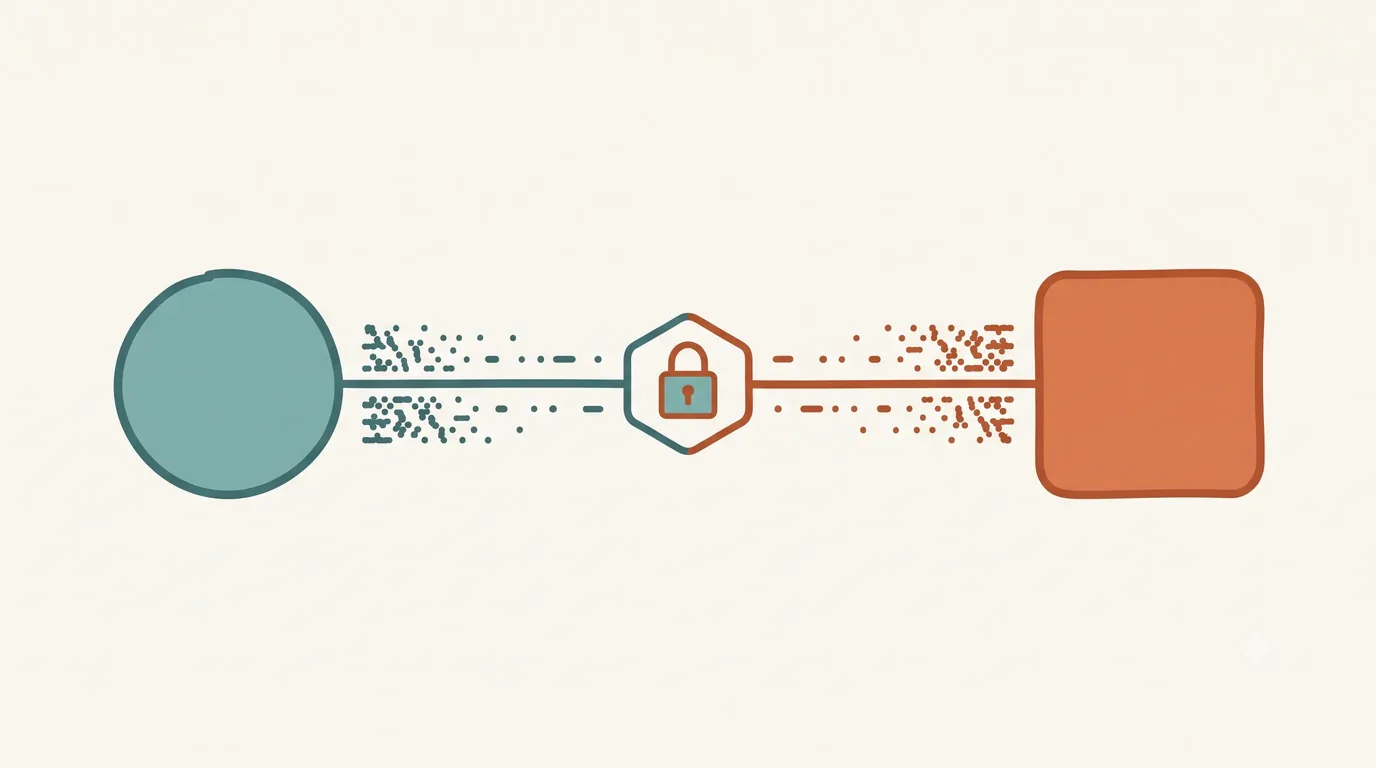
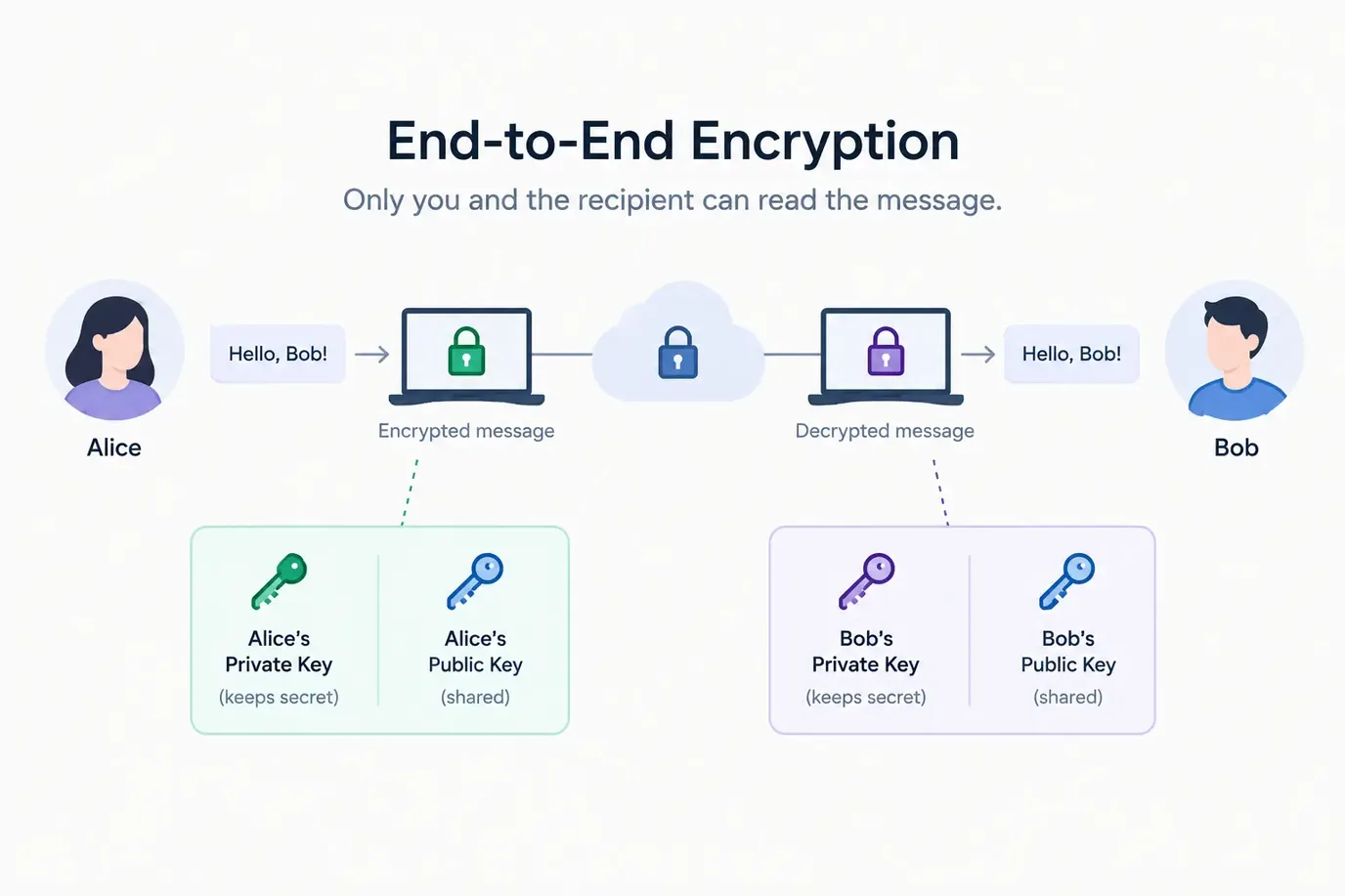
Sender encrypts message on-device using symmetric session keys. The ciphertext traverses public networks unreadable until decrypted by recipient.
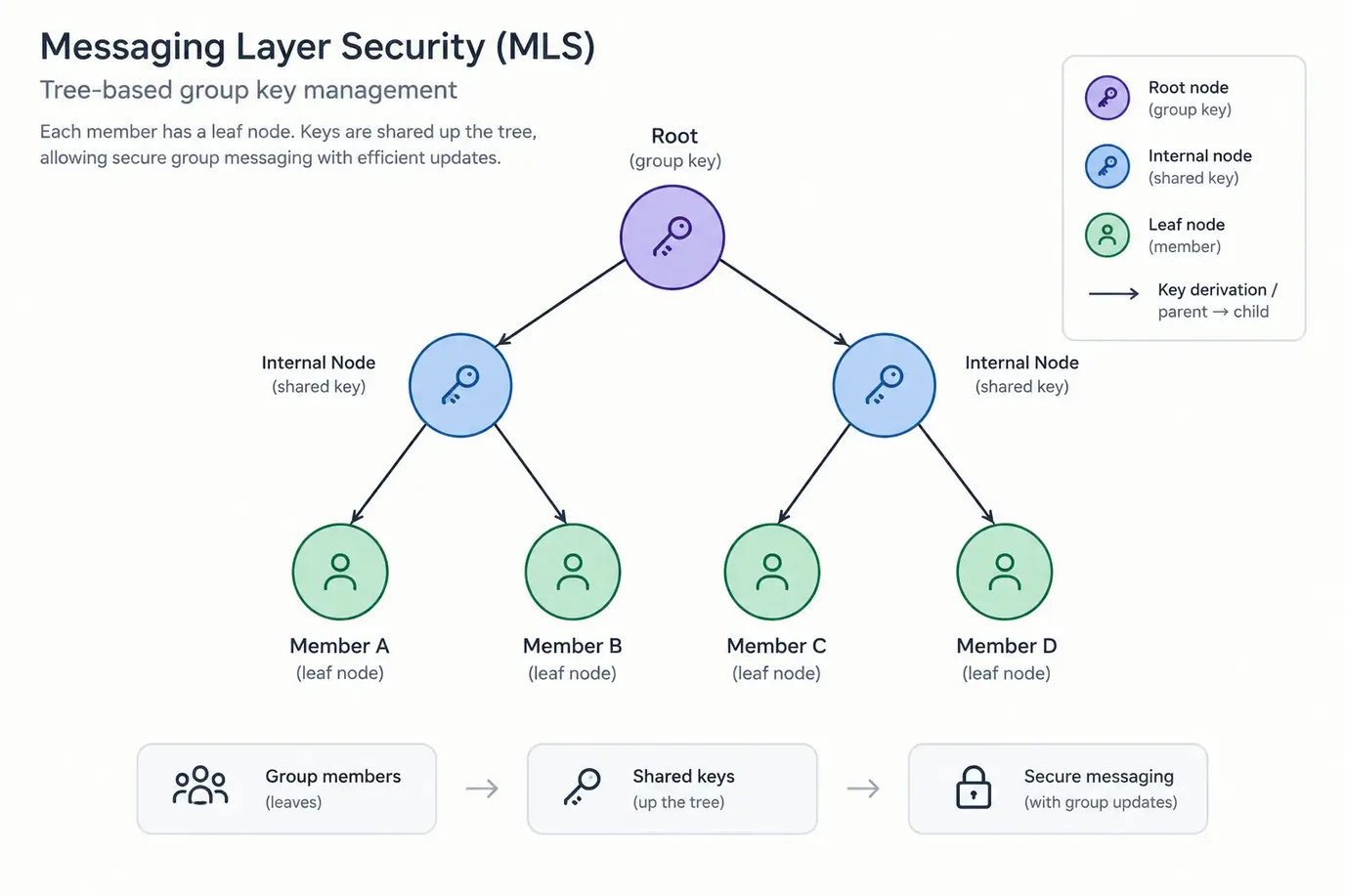
Cryptographic Key Lifecycle and Epoch Ratchets
Key Generation
Entropy harvested from OS cryptorandom hardware generators.
Local Protection
Private keys reside in locked device memory; never sent to servers.
Secure Usage
Symmetric session keys derive payload ciphers with unique nonces.
Epoch Ratchet
Automated key rotation locks past history even if future keys leak.
Hardware CSPRNG key generation, secure local enclave custody, single-use nonces, and automated forward-secrecy ratcheting.
Every digital transaction, secure conversation, and protected database relies on a fundamental mathematical shield: encryption. Yet despite being central to digital safety, encryption is frequently misunderstood as a mystical lock or a generic software setting. In reality, encryption is a deterministic mathematical transformation governed by cryptographic keys.
What Is Encryption?
Encryption takes readable information (known as plaintext) and combines it with a mathematical string (known as a key) through an algorithm (known as a cipher) to output an unreadable scramble (known as ciphertext).
Without the corresponding key, modern ciphertext is mathematically indistinguishable from random digital noise. Even the most powerful supercomputing clusters in existence would require billions of years of brute-force attempts to guess a properly generated 256-bit symmetric key.
Symmetric vs. Asymmetric Encryption
All modern cryptography divides into two primary paradigms:
1. Symmetric Encryption (Shared Secret)
In symmetric ciphers (such as AES-256-GCM or ChaCha20-Poly1305), the same secret key encrypts and decrypts data. Think of it like a physical safe with a single mechanical combination: anyone who knows the combination can open the safe and lock it again.
- Advantage: Incredibly fast and computationally lightweight. Millions of gigabytes can be encrypted in real time with hardware acceleration.
- Disadvantage: How do sender and recipient agree on the secret combination without an eavesdropper intercepting it during initial exchange?
2. Asymmetric Encryption (Public / Private Key Pairs)
Asymmetric cryptography, developed in the 1970s, solves the key distribution problem. Instead of one key, you generate a mathematically linked pair:
- The Public Key: Shared openly with the world (like a public mailing slot on your front door). Anyone can use it to deposit an encrypted message.
- The Private Key: Kept strictly confidential on your physical device. Only this key can unlock and read messages deposited in your slot.
How Modern Apps Combine Both: Hybrid Encryption
Asymmetric algorithms require heavy mathematical computations that are too slow to encrypt large message histories, images, or real-time audio streams. Therefore, high-security systems use Hybrid Encryption:
- When User A contacts User B, their devices use asymmetric algorithms (like
X25519Diffie-Hellman key exchange) to establish a mutual shared secret over an insecure channel. - Once the shared secret is established, the devices instantly derive a high-speed symmetric session key (like AES-256).
- All actual messages, voice frames, and files are encrypted using the fast symmetric key.
The Real Security Challenge: Key Management
The algorithms protecting your data (AES, Curve25519, SHA-256) are open, standardized, and battle-tested. When encryption fails in the real world, it is almost never because the mathematics were broken. It fails because of poor key custody:
- If a company holds your encryption keys on their cloud servers, they have the capability to decrypt your data at any time.
- If backup keys are stored in unencrypted cloud sync accounts, a password breach compromises the entire archive.
- True zero-knowledge architecture mandates that keys are generated on-device, stored in hardware security enclaves, and never disclosed to any external server.
- ✓ Encryption converts readable plaintext into indistinguishable ciphertext using mathematical algorithms governed by cryptographic keys.
- ✓ Symmetric encryption (AES-256, ChaCha20) uses the same secret key for both scrambling and descrambling, providing extreme computational efficiency.
- ✓ Asymmetric encryption (RSA, Curve25519) pairs a public encryption key with a private decryption key, solving the initial secret distribution problem.
- ✓ Modern secure messaging uses hybrid encryption: asymmetric key exchange establishes a shared secret, which derives fast symmetric session keys.
- ✓ Security collapses if key management fails; true end-to-end encryption requires that private keys never leave local device enclaves.