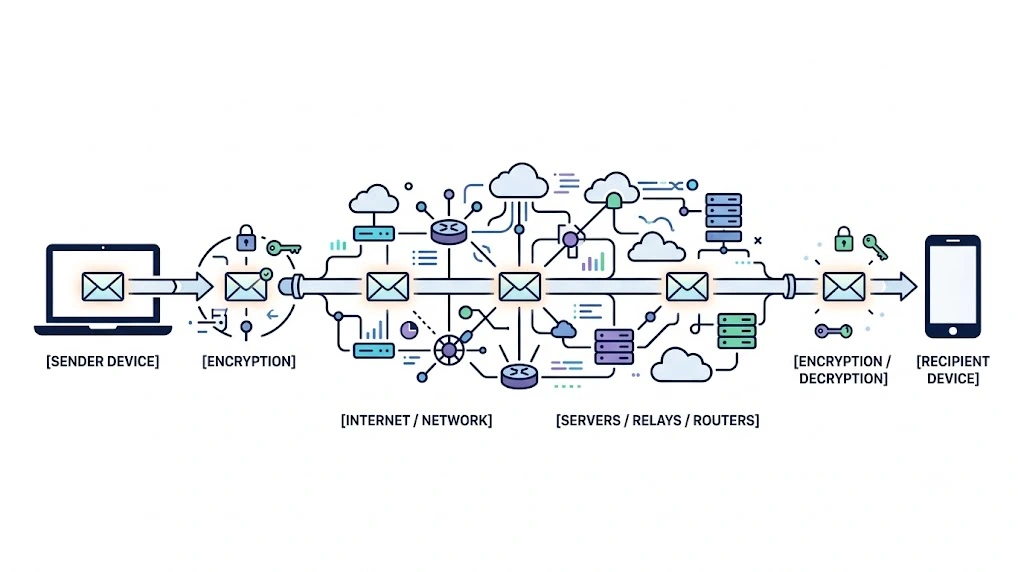
When algorithms are optimized solely for engagement, user attention becomes a harvested resource. Centralized platforms deploy proprietary recommendation engines designed to amplify outrage, maximize screen time, and construct detailed behavioral dossiers. Lupyd adopts a fundamentally different model: moving the algorithm directly to the user's hardware.
The Hidden Costs of Server-Side Content Curation
When recommendation logic executes on centralized servers, every pause, click, replay, and search query is ingested into a permanent behavioral profile. These profiles are monetized through programmatic ad auctions, analyzed for psychological triggers, and preserved indefinitely in cloud databases susceptible to leaks.
Centralized feeds also create opaque filter bubbles. When platform engineers adjust weights to boost ad yield or viral retention, users have neither transparency into what was altered nor the power to recalibrate their discovery stream.
Client-Side Recommendation: Local Intelligence, Zero Surveillance
Lupyd moves recommendation processing entirely to the client device. Your phone or browser analyzes your interactions locally, producing a compact numerical embedding that captures broad thematic interests:
- Device-Local Signal Retention: Reading habits and saved topics never leave your hardware. No behavioral timeline is logged to an external database.
- Anonymous Discovery Calls: When fetching new posts, the application transmits an unauthenticated vector embedding to a public index. The server computes distance similarity and returns top candidates without knowing who made the query.
- Ephemeral Queries: Search requests are stateless. Once candidate IDs are returned, the server discards the vector, preventing retrospective session stitching.
- User-Governed Curation: Because the preference vector is stored locally, you can adjust thematic sliders, clear specific interests, or export your preference bundle when migrating devices.
Balancing Exploration and Privacy
A frequent misconception is that client-side models cannot handle discovery for brand-new users. Lupyd solves cold-start onboarding through curated public channels, community topics, and chronological feeds that require zero tracking. As you engage, the local model organically calibrates to your interests, improving discovery through transparent client calculation rather than centralized surveillance.
- ✓ Centralized recommendation engines rely on comprehensive behavioral surveillance to build monetizable user profiles.
- ✓ Lupyd executes recommendation scoring locally on your device, preventing centralized profiling of your interests or habits.
- ✓ Anonymous mathematical preference vectors represent interests without storing or transmitting raw interaction logs to any server.
- ✓ Content queries are stateless: servers match vectors to content without learning user identities or connection histories.
- ✓ Users maintain complete data sovereignty, with the ability to inspect, modify, export, or reset their preference profile at any time.